
In 2026, businesses in the UAE are under more pressure than ever to operate lean, compliant, and data-driven procurement functions. With regulatory changes, digital transformation initiatives, and increasing competition across sectors, inefficient purchasing and payment workflows are no longer just operational issues—they are strategic risks.
Many B2B marketers, SaaS founders, and SME owners believe procurement maturity is only a concern for large enterprises. That’s no longer true. Whether you’re scaling a SaaS startup in Dubai or managing multi-vendor contracts across the GCC, your Source-to-Pay Maturity directly impacts cost control, compliance, and growth velocity.
The real question is not whether you need optimization. It’s: How mature is your Source-to-Pay process today—and how does it compare to best-in-class organizations?
This guide walks you through how to benchmark your Source-to-Pay Maturity in 2026, using clear frameworks, real-world examples, and actionable steps tailored to UAE businesses.
WHY Source-to-Pay Maturity Matters
Procurement Is Now a Strategic Lever
According to Deloitte’s 2023 Global CPO Survey, 76% of procurement leaders say their function is expected to deliver strategic value beyond cost savings. (Source: Deloitte Global CPO Survey)
In other words, procurement is no longer just about processing POs. It’s about:
- Managing supplier risk
- Improving cash flow
- Enforcing governance
- Enabling scalable growth
For SaaS founders and SMEs, this means your procurement function can either accelerate your expansion—or slow it down.
UAE Regulatory & Compliance Pressure Is Increasing
The UAE continues to modernize its regulatory ecosystem, including VAT compliance, e-invoicing mandates, and financial transparency standards. Poorly structured procurement workflows create:
- Audit risks
- VAT reconciliation errors
- Delayed vendor payments
- Weak approval controls
Higher Source-to-Pay Maturity ensures your systems are aligned with compliance expectations while remaining operationally agile.
Cost Leakage Is More Common Than You Think
McKinsey estimates that organizations can reduce procurement costs by 8–12% through process optimization and digitization. (Source: McKinsey Digital Procurement Insights)
For SMEs and SaaS companies, that margin can directly impact profitability.
Low maturity often leads to:
- Maverick spending
- Duplicate vendor payments
- Manual reconciliation errors
- Poor contract visibility
Benchmarking helps uncover hidden inefficiencies before they compound.
WHAT is Source-to-Pay Maturity
Defining Source-to-Pay
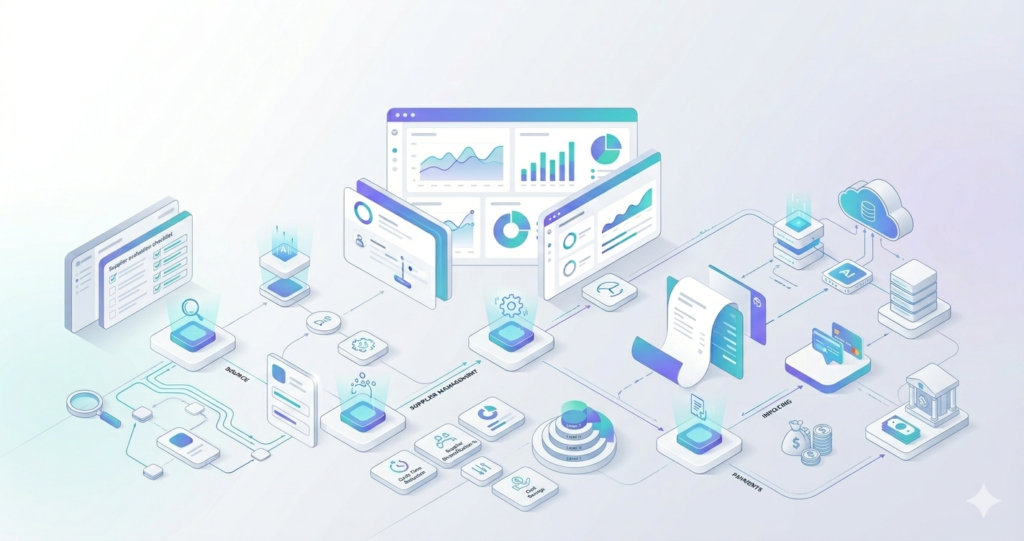
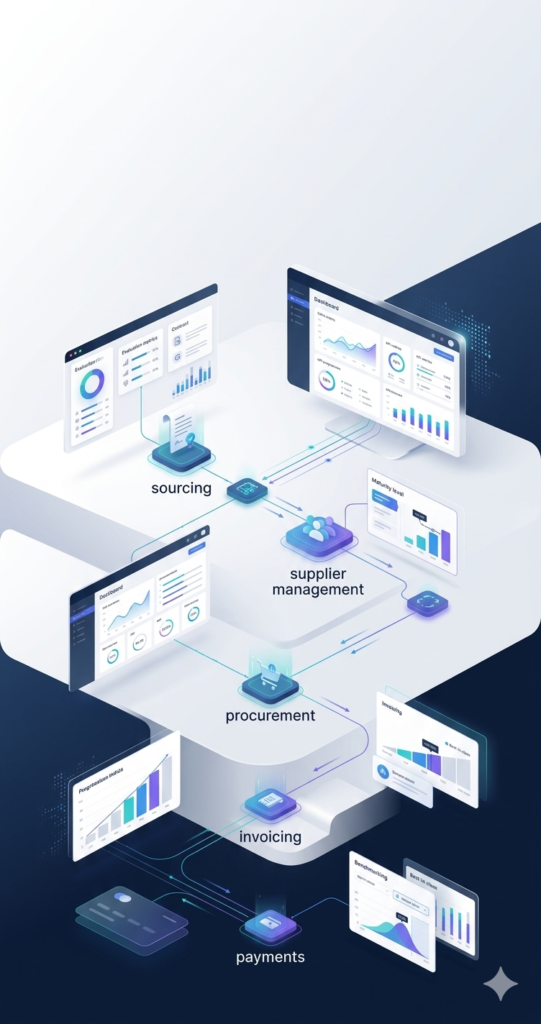
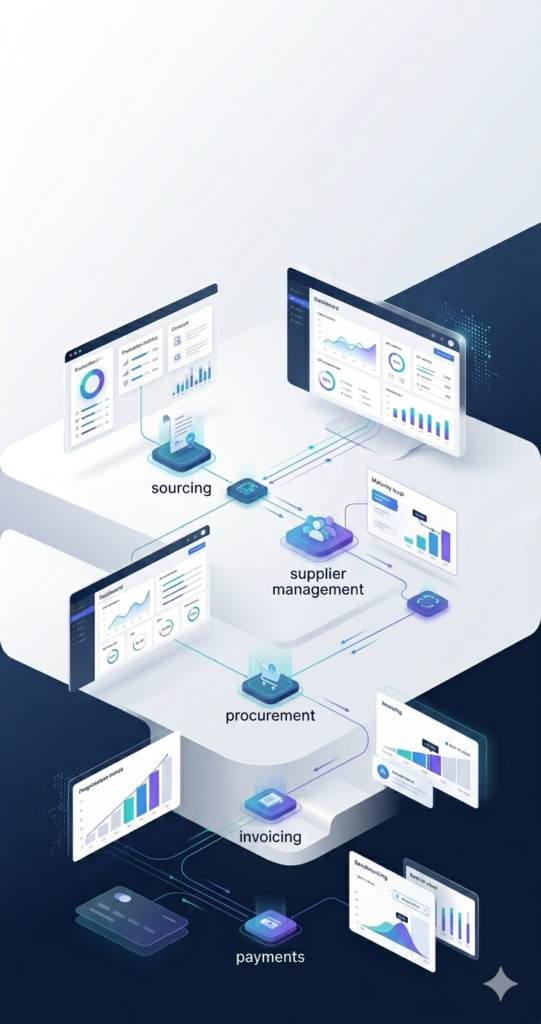
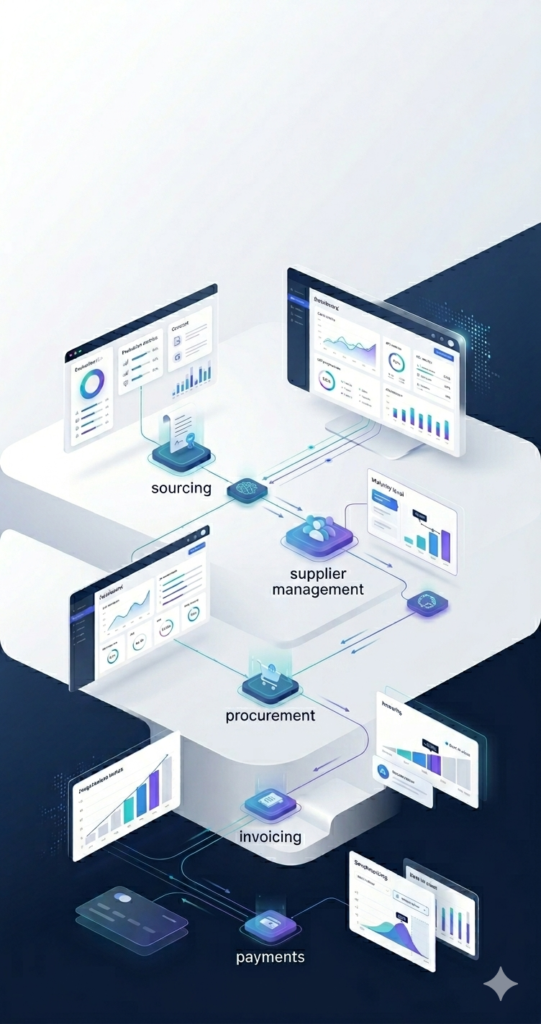
Source-to-Pay (S2P) refers to the complete process from identifying suppliers (sourcing) to paying invoices. It includes:
- Supplier discovery & evaluation
- Contract negotiation
- Purchase requisition
- Purchase order creation
- Goods/services receipt
- Invoice processing
- Payment & reconciliation
When these steps are disconnected, organizations operate in reactive mode.
Understanding Source-to-Pay Maturity Levels
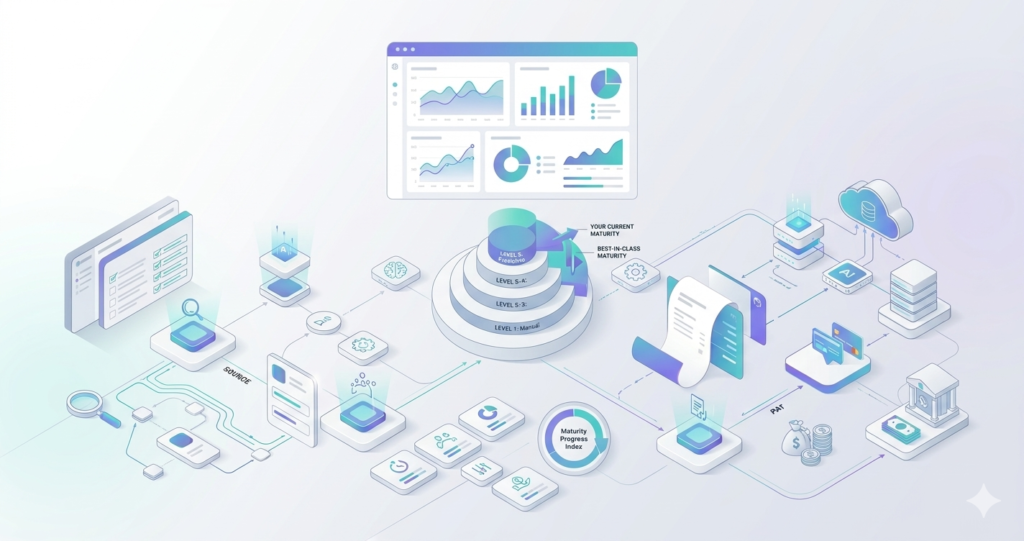
Source-to-Pay Maturity measures how structured, automated, integrated, and controlled your S2P processes are.
A simple 5-level maturity model looks like this:
Level 1: Ad Hoc
- Email approvals
- Excel-based tracking
- No centralized visibility
- Reactive vendor management
Level 2: Basic Control
- ERP for POs
- Manual approvals still common
- Limited reporting
Level 3: Standardized
- Defined workflows
- Policy-based approvals
- Centralized supplier data
Level 4: Integrated
- End-to-end automation
- ERP + S2P integration
- Real-time dashboards
Level 5: Optimized & Predictive
- Spend analytics
- AI-driven insights
- Risk scoring
- Continuous improvement
Most SMEs in the UAE operate between Level 2 and Level 3.
Key Dimensions to Measure
To benchmark effectively, evaluate these five areas:
- Process standardization
- Technology integration
- Governance & compliance
- Data visibility & analytics
- Supplier collaboration
Benchmarking isn’t about software alone. It’s about structure, discipline, and control.
HOW to Implement Source-to-Pay Maturity Benchmarking
Now let’s make this practical.
Step 1: Map Your Current Workflow
Document your current Source-to-Pay flow from request to payment.
Ask:
- Who approves what?
- Where are bottlenecks?
- How many manual handoffs exist?
- Is there a single source of truth?
Example:
A Dubai-based SaaS company discovered that approvals were stuck in WhatsApp messages and email threads, causing 7–10 day delays in vendor onboarding.
Mapping revealed the real problem: lack of structured workflow logic.
Step 2: Measure KPIs
Benchmark against these common KPIs:
- Purchase order cycle time
- Invoice processing time
- % of spend under contract
- Maverick spend rate
- Approval turnaround time
- Cost per invoice processed
According to APQC, top-performing organizations process invoices at 60% lower cost compared to bottom performers. (Source: APQC Accounts Payable Benchmarking)
If your invoice processing is manual, your maturity level is likely below Level 3.
Step 3: Assess Technology Alignment
Ask yourself:
- Is procurement integrated with ERP?
- Are workflows automated?
- Do you have audit trails?
- Can leadership see spend in real time?
Many UAE SMEs have ERP systems but lack orchestration layers that enforce policy logic.
Technology maturity is not about having tools—it’s about integration and workflow discipline.
Step 4: Evaluate Governance & Controls
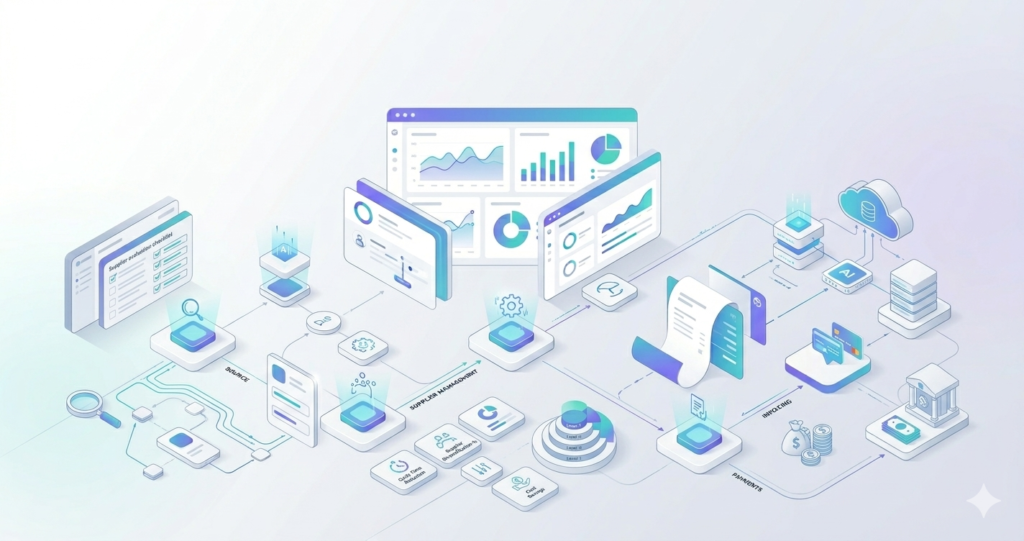
Strong Source-to-Pay Maturity includes:
- Role-based approvals
- Budget controls
- Segregation of duties
- Automated compliance checks
Example:
A manufacturing SME in Sharjah reduced unauthorized purchases by 32% after implementing structured approval tiers linked to budget thresholds.
Step 5: Score and Benchmark
Create a maturity scoring sheet:
Rate each dimension from 1 to 5:
- Process structure
- Automation level
- Data visibility
- Control strength
- Supplier collaboration
Total score determines your maturity tier.
This provides a benchmark baseline for 2026.
Step 6: Build a 12-Month Roadmap
Once benchmarked, prioritize:
- Standardization first
- Automation second
- Analytics third
Do not jump directly to AI or advanced analytics without structured workflows.

Conclusion
In 2026, operational discipline separates scalable companies from struggling ones.
Benchmarking your Source-to-Pay Maturity is not just about process improvement—it’s about:
- Reducing cost leakage
- Improving compliance
- Enhancing decision visibility
- Strengthening governance
- Supporting sustainable growth
For B2B marketers, SaaS founders, and SMEs in the UAE, structured Source-to-Pay processes provide strategic clarity and operational resilience.
If you haven’t benchmarked your Source-to-Pay maturity yet, now is the right time.
Start by mapping your workflows. Measure your KPIs. Score your maturity. Then build a roadmap.
Or, if you’d prefer a structured evaluation aligned to your business size and industry, consider conducting a professional Source-to-Pay maturity assessment tailored to UAE regulatory requirements.
The earlier you benchmark, the easier it is to scale.

