Procurement has undergone a massive transformation over the last decade, especially in the United States where organizations face increasing pressure to reduce costs, improve efficiency, and maintain transparency. Check out Benefits of Using an AI-Based Procurement Tool for your everyday requirement.
With supply chain disruptions becoming more frequent and businesses pushing for greater operational resilience, the role of procurement has shifted from a cost-control function to a strategic powerhouse.
This shift has accelerated the adoption of digital procurement transformation, particularly AI-based procurement tools that enable teams to automate workflows, enhance visibility, and make faster, smarter decisions. Today, organizations across industries — manufacturing, retail, logistics, healthcare, government, and technology — are successfully implementing these intelligent systems to modernize operations.
In this blog, we explore the 10 key benefits of using an AI-based procurement tool in the USA, and why it’s becoming essential for companies that want to stay competitive in a rapidly changing environment.

10 Benefits of an AI-Based Procurement Tool in the USA
- Faster and more accurate decision-making
- Reduced operational costs and higher savings
- Automated workflows eliminating manual effort
- Enhanced supplier management and collaboration
- Improved compliance and governance
- Real-time visibility across procurement
- Predictive analytics for accurate forecasting
- Stronger risk management and resilience
- Seamless ERP integration
- Better user experience and productivity
1. Faster and More Accurate Decision-Making
One of the biggest advantages of an AI-based procurement tool USA organizations benefit from is improved decision-making. Unlike traditional tools, AI analyzes huge amounts of procurement data in seconds — including pricing, supplier performance, market fluctuations, risks, and consumption trends.
AI in procurement helps leaders take the guesswork out of decisions such as:
- Which supplier offers the best long-term value
- When to reorder materials
- How to negotiate price reductions
- Where spending leakages are occurring
- Whether contract terms match supplier performance
With real-time dashboards and automated insights, procurement managers can make decisions backed by accurate, data-driven intelligence rather than intuition. This is especially important in the USA where supply chain fluctuations and global sourcing complexities require faster response times.
2. Reduced Operational Costs and Higher Savings
Cost optimization is one of the top priorities for procurement teams in the United States. AI tools excel here by identifying hidden cost-saving opportunities such as:
- Duplicate spending
- Maverick purchases
- Off-contract buying
- Supplier overcharges
- Inefficient approval cycles
AI-powered algorithms can forecast future spending, recommend budget adjustments, and highlight cost anomalies before they escalate. This makes procurement automation software an essential investment for CFOs and procurement leaders aiming to reduce overhead and improve bottom-line efficiency.
Organizations using AI-based procurement tools in the USA have reported:
- 15–25% reduction in procurement cycle times
- 10–20% reduction in cost leakages
- 20–30% improvement in contract compliance
The savings potential is substantial — and immediate.
3. Automated Workflows That Eliminate Manual Effort
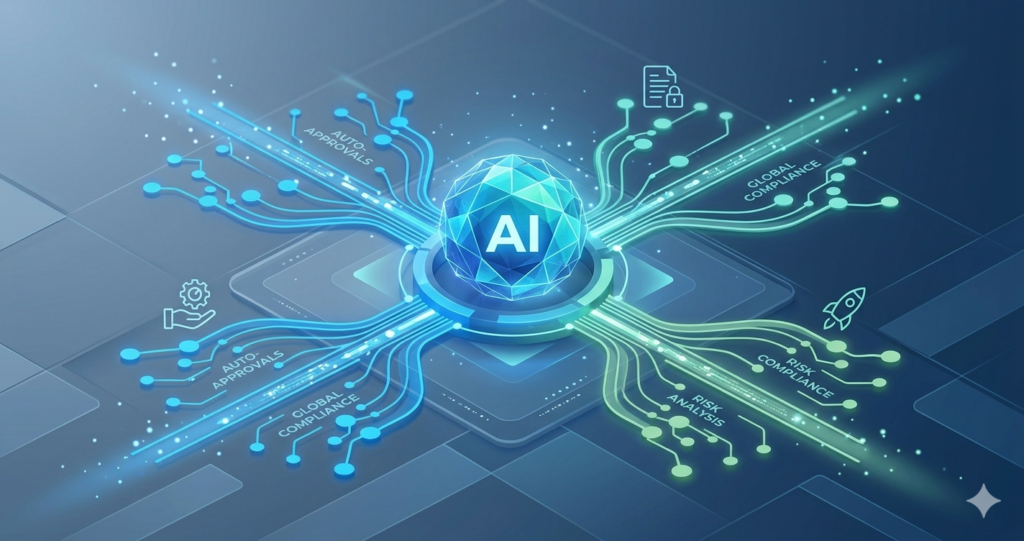
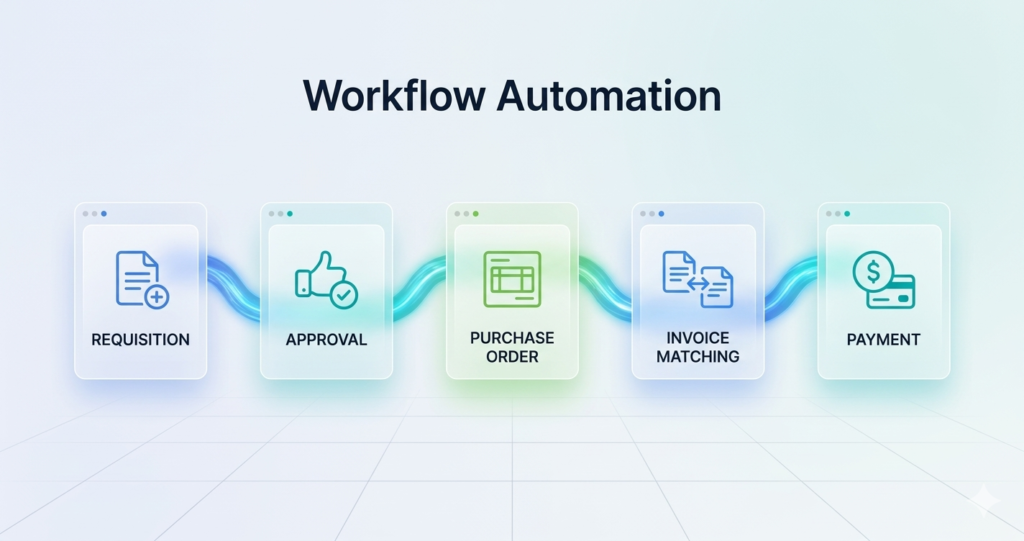
Traditional procurement processes involve repetitive manual tasks such as PO creation, invoice matching, vendor communication, document tagging, data entry, and approval routing. These tasks slow teams down and increase the likelihood of human error.
AI and automation significantly reduce administrative workload by:
- Auto-processing invoices
- Auto-matching POs with GRNs
- Auto-creating purchase requisitions
- Auto-sending reminders and follow-ups
- Auto-categorizing spend data
- Auto-assigning tasks based on rules or policies
This level of automation allows procurement professionals to shift from tactical execution to strategic initiatives such as supplier innovation, risk analysis, and contract optimization.
4. Enhanced Supplier Management and Collaboration
Supplier management is often one of the most complex parts of procurement, especially in the USA where organizations work with both domestic and international suppliers. With an AI-driven supplier management system, procurement leaders gain a 360-degree view of all supplier activities.
AI improves supplier management through:
- Performance scoring based on real-time metrics
- Predictive risk analysis
- Automated onboarding and compliance checks
- AI-based recommendations for supplier selection
- Insightful contract monitoring
- Supplier communication portals
By centralizing supplier data, performance dashboards, and communication tools, organizations can build stronger supplier relationships, reduce risk, and achieve long-term sustainability.
5. Improved Compliance and Governance
Compliance is a major concern for US-based companies due to evolving regulations, state-wise policies, federal audit requirements, and international trade rules.
AI-based procurement tools automatically enforce compliance by:
- Ensuring all purchases follow predefined approval workflows
- Restricting off-contract buying
- Enforcing regulatory requirements
- Monitoring contract adherence
- Auditing supplier activities
- Flagging abnormal spending behavior
For industries like healthcare, government, BFSI, and utilities, AI-driven compliance minimizes liabilities, reduces risks, and prevents penalties.
6. Real-Time Visibility Across the Entire Procurement Cycle
One of the biggest challenges in manual procurement is the lack of transparency. Procurement teams often struggle to track the status of requisitions, POs, invoices, deliveries, and payments.
AI-based tools and Source-to-Pay automation solve this by offering:
- Real-time visibility across procurement
- Unified dashboards
- End-to-end traceability
- Workflow tracking
- Supplier performance insights
- Spend visibility and analytics
With centralized data, procurement leaders gain full operational transparency — enabling proactive decision-making and strategic planning.
7. Predictive Analytics for Better Forecasting
Forecasting is often one of the most difficult tasks for procurement professionals. AI tools use predictive analytics and machine learning models to forecast:
- Future demand
- Supplier risks
- Market pricing changes
- Seasonal fluctuations
- Budget trends
- Potential stock-outs
For businesses in the USA, where supply chain disruptions are common, predictive analytics provide a competitive edge by helping teams stay ahead of shortages, negotiate better contracts, and plan procurement cycles more efficiently.
8. Stronger Risk Management and Resilience
Over the last few years, US companies have faced unprecedented risks — global disruptions, shipping delays, inflation, shortages, and geopolitical uncertainty. This has increased the need for smarter risk management.
AI plays a crucial role by:
- Predicting supplier risks
- Tracking financial healthf
- Identifying market vulnerabilities
- Monitoring geopolitical impacts
- Detecting compliance issues
- Flagging fraudulent activity
With proactive risk alerts and advanced analytics, procurement teams can take preventive action before problems escalate.
9. Seamless Integration With Existing ERP Systems
The US market is filled with organizations using different ERP systems such as SAP, Oracle, Microsoft Dynamics, Netsuite, Workday, and Infor. AI procurement tools are designed to integrate easily with these platforms, enabling a seamless flow of data.
Integration benefits include:
- Unified financial data
- Consistent supplier records
- Real-time sync between procurement and finance
- Improved cross-department collaboration
- Elimination of redundant data entry
- Automated invoice-to-payment cycles
This ensures the procurement ecosystem works as a cohesive unit, without adding complexity.
10. Better User Experience and Employee Productivity
Modern procurement teams expect intuitive, user-friendly systems that simplify their work — not tools that create more complexity. AI-based procurement platforms offer:
- Clean and intuitive digital interfaces
- Self-service portals for end-users
- Faster processing
- Automated recommendations
- Voice and chatbot support
- Mobile-friendly approvals
This leads to higher adoption rates and more productive teams.

Conclusion
The rise of artificial intelligence is reshaping procurement across the globe, and the United States is at the forefront of this transformation. By adopting an AI-based procurement tool USA organizations gain unmatched speed, accuracy, visibility, and resilience. AI not only automates routine tasks but also empowers procurement teams to act strategically — improving supplier relationships, reducing risks, and optimizing spending.
Whether you’re a large enterprise or a scaling mid-sized business, AI in procurement is no longer a future trend — it is a necessity for competitiveness. Companies that adopt AI today will significantly outperform those stuck with manual, outdated processes.
If your organization is ready to modernize workflows, improve ROI, and strengthen procurement strategy, the time to embrace AI-powered procurement automation is now.